
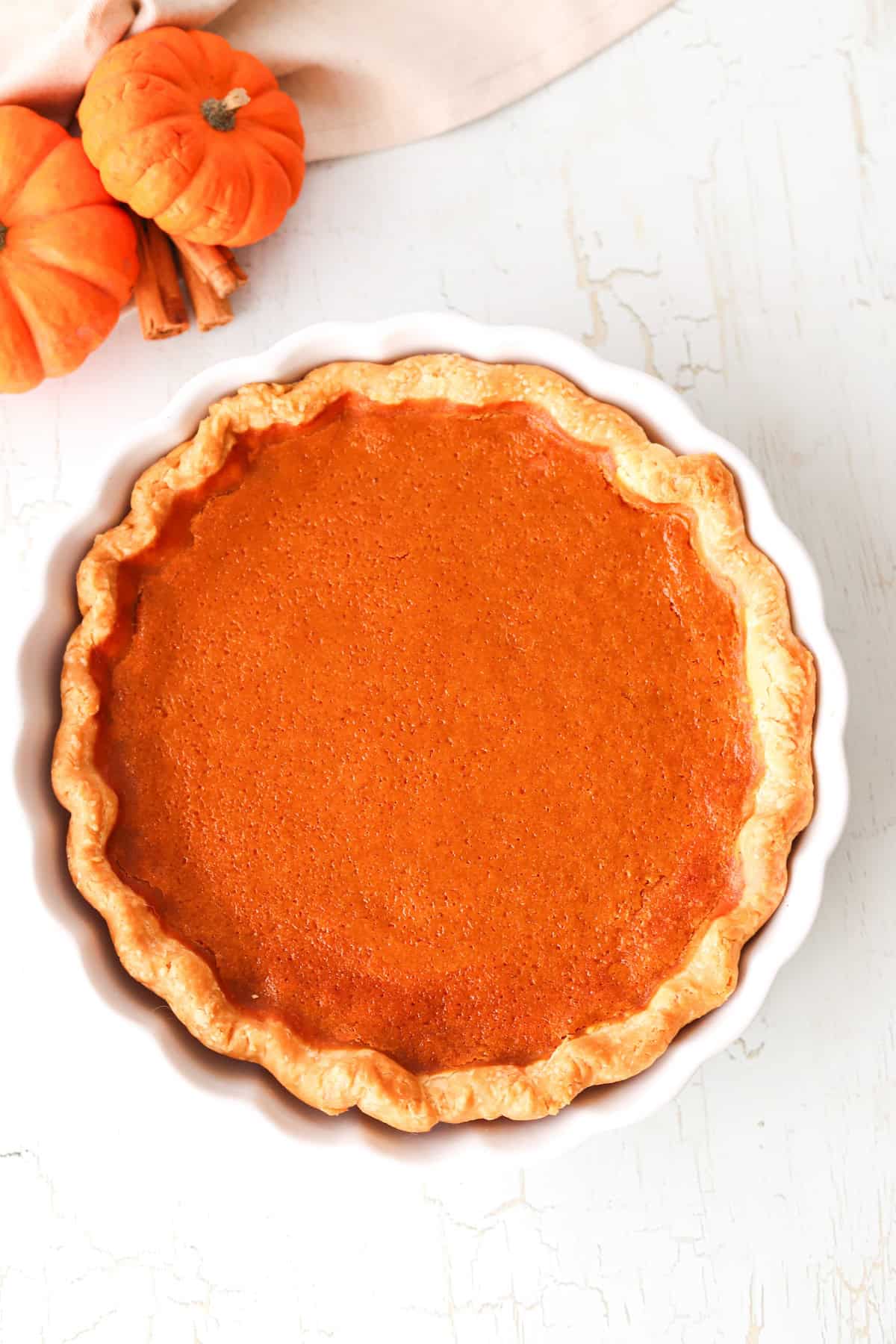
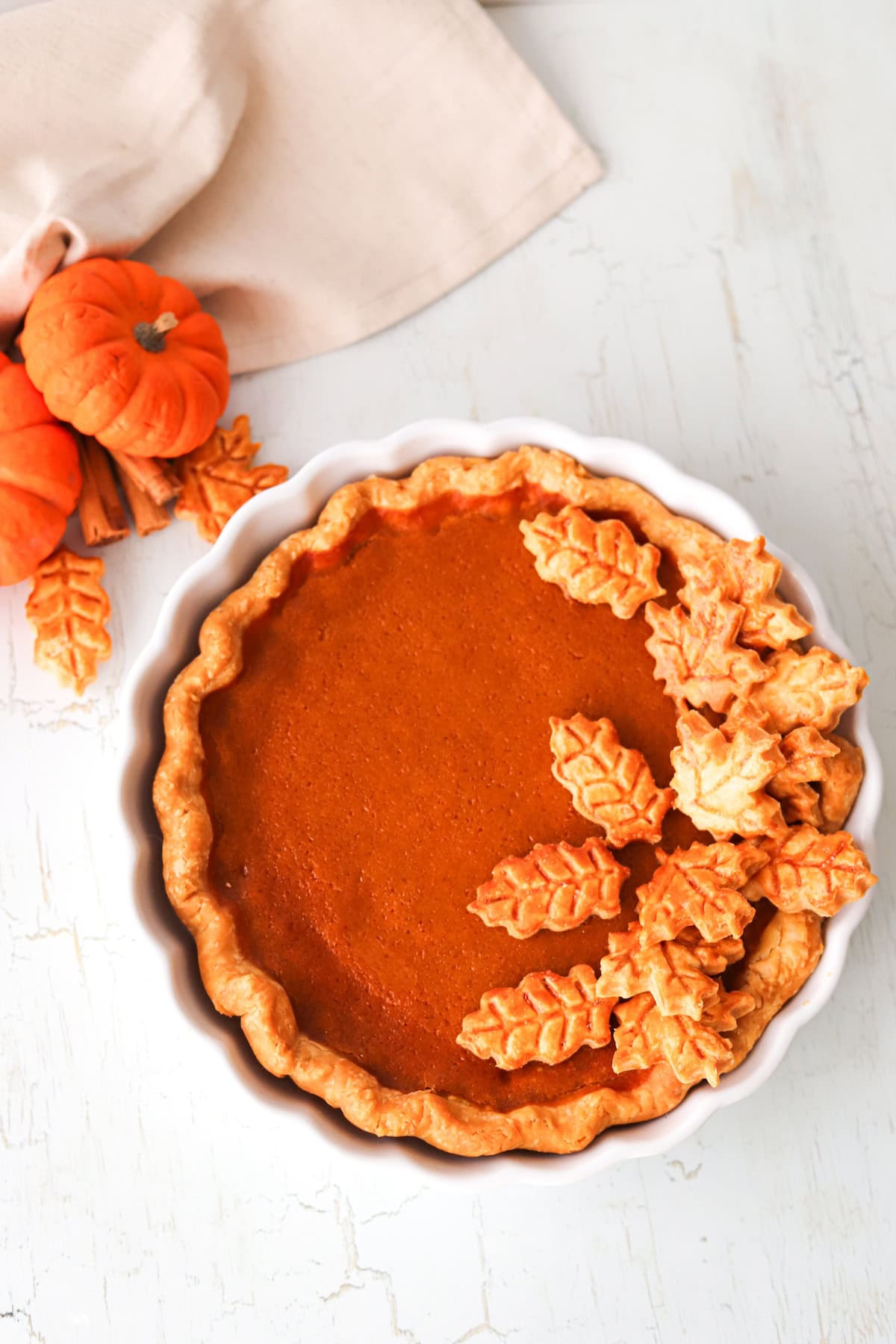
This Gluten Free Pumpkin Pie recipe made from scratch has a lush, silky custard filled with warm seasonal spices in a beautiful flaky pie crust. It's the perfect holiday pie and delicious served with chantilly cream.
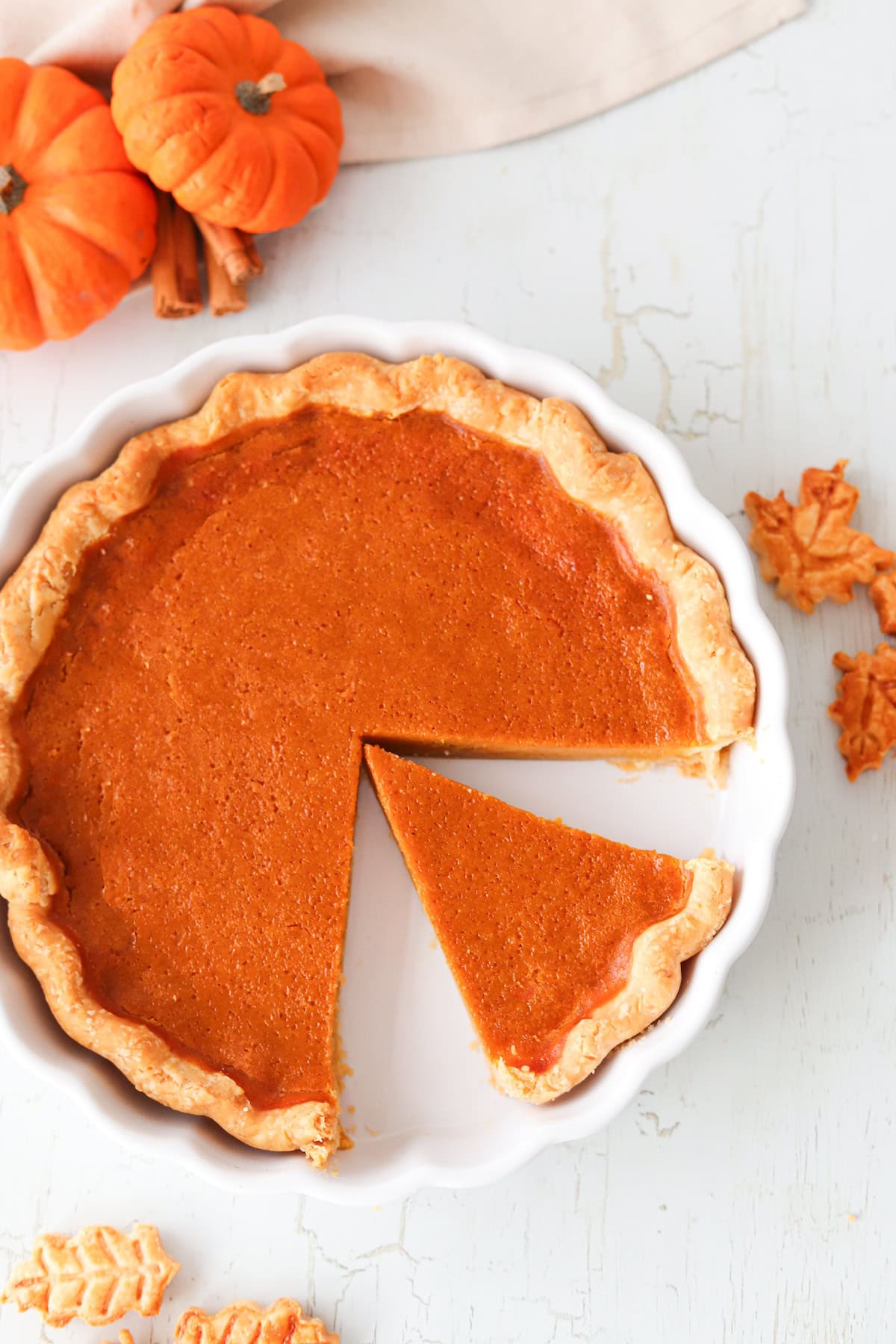
When the leaves start to change and fall, I get excited to make all my gluten free pumpkin desserts from this gluten free pumpkin pie to pumpkin cheesecake bars, using homemade pumpkin puree or store-bought canned pumpkin puree.
Other pumpkin recipes that you will love are my gluten free pumpkin bread with chocolate chips, gluten free pumpkin donuts, and my gluten free pumpkin cake is always a popular choice.
Jump to:
⭐ Why we love this recipe
- Easy to make - making pumpkin pie at home is so much easier than you think and definitely worth the effort. I have also included images to help you along the way.
- Full of cozy autumn flavors - all the warm spices that are just perfect for fall.
- Perfect silky texture - a rich, smooth pumpkin custard filling encased in a flaky pie crust.
- Gluten free - uses only gluten free ingredients but doesn't compromise in flavor or texture.

Recipe Development
Over the years, my gluten free pumpkin pie has been made many ways and this variation is my go-to recipe. I prefer it as it has the perfect texture and balance of flavor in my opinion.
I have tested this recipe with both homemade pumpkin puree and Libby's canned pumpkin puree and both work perfectly. When using homemade pumpkin puree, be sure to strain the excess juices first.
I prefer to use fresh heavy cream rather than sweetened condensed milk. I like to control the sweetness of the pie and have adapted the amount of sugar over time, as I used to make it with 50 grams more sugar than I do now.
I also used to make it part cream and part milk, I now prefer using only cream as it decreases the amount of ingredients needed, and I prefer the richness that the full cream adds.
Where I live I don't often see ready made gluten free pie crust in the stores, so I usually make my own from scratch. This gluten free pumpkin pie has been tested with both my gluten free pie crust and gluten free shortcrust pastry.
📋 Ingredients Notes
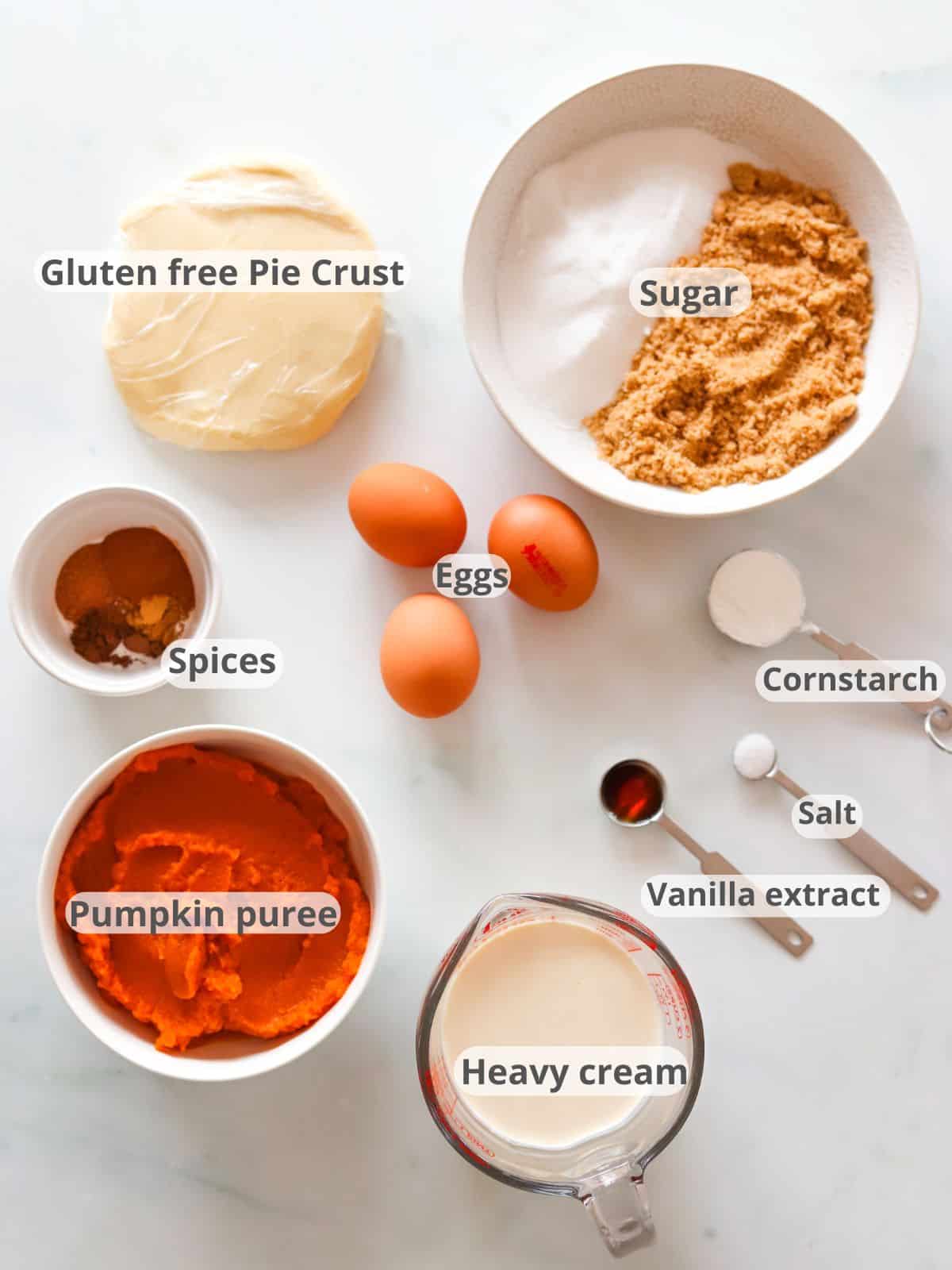
- Gluten free pie crust - I like to make my gluten free pie crust from scratch and I have included instructions below on how to make it, but you can also use ready-made gluten-free pie crust if you prefer or are short on time.
- Sugar - This recipe uses both light brown sugar and white sugar in the filling as I like the combination of both, but you can use all light brown sugar if preferred.
- Cornstarch - This helps stabilise and thicken the custard filling and makes for a smooth silky texture. See my cornstarch and cornflour post.
- Spices - I love the combination of ground cinnamon, ground ginger, ground nutmeg for those seasonal flavors.
- Salt - a little salt helps enhance the flavors.
- Pumpkin puree - I have used both homemade pumpkin puree and store bought canned pumpkin puree. I used Libbys pumpkin puree.
- Eggs - always use eggs at room temperature.
- Heavy cream - AKA double cream. I prefer using heavy cream rather than sweetened condensed milk as I like to control the amount of sugar and prefer the finished texture.
- Vanilla extract - adds additional flavor.
See the recipe card below for ingredient measurements.
⚡ Substitutions & Variations
- Increased spices - Sometimes when I want an additional kick from the spices, I add an additional ¼ teaspoon of allspice or ⅛ teaspoon of ground cloves to the filling.
- Shortcrust pastry - You can use your preferred pie crust or ready-made pie crust. Sometimes I use my gluten free shortcrust pastry.
🥣 Step by Step Instructions
Below is a brief step-by-step process with photos of how to make gluten free pumpkin pie.
See the recipe card below for more detailed recipe instructions.
I have included information on how to make my gluten free pie crust, but you can use your preferred recipe. I recommend checking out my full post for my gluten-free pie crust recipe, as it's packed with helpful tips.
This recipe yields 1 9-inch pie crust with extra leftover for decorations or mini pie crusts. Alternatively, it will make 2x 8-inch pie crusts. The filling will make a deep 9-inch filling or two 8-inch shallower fillings.
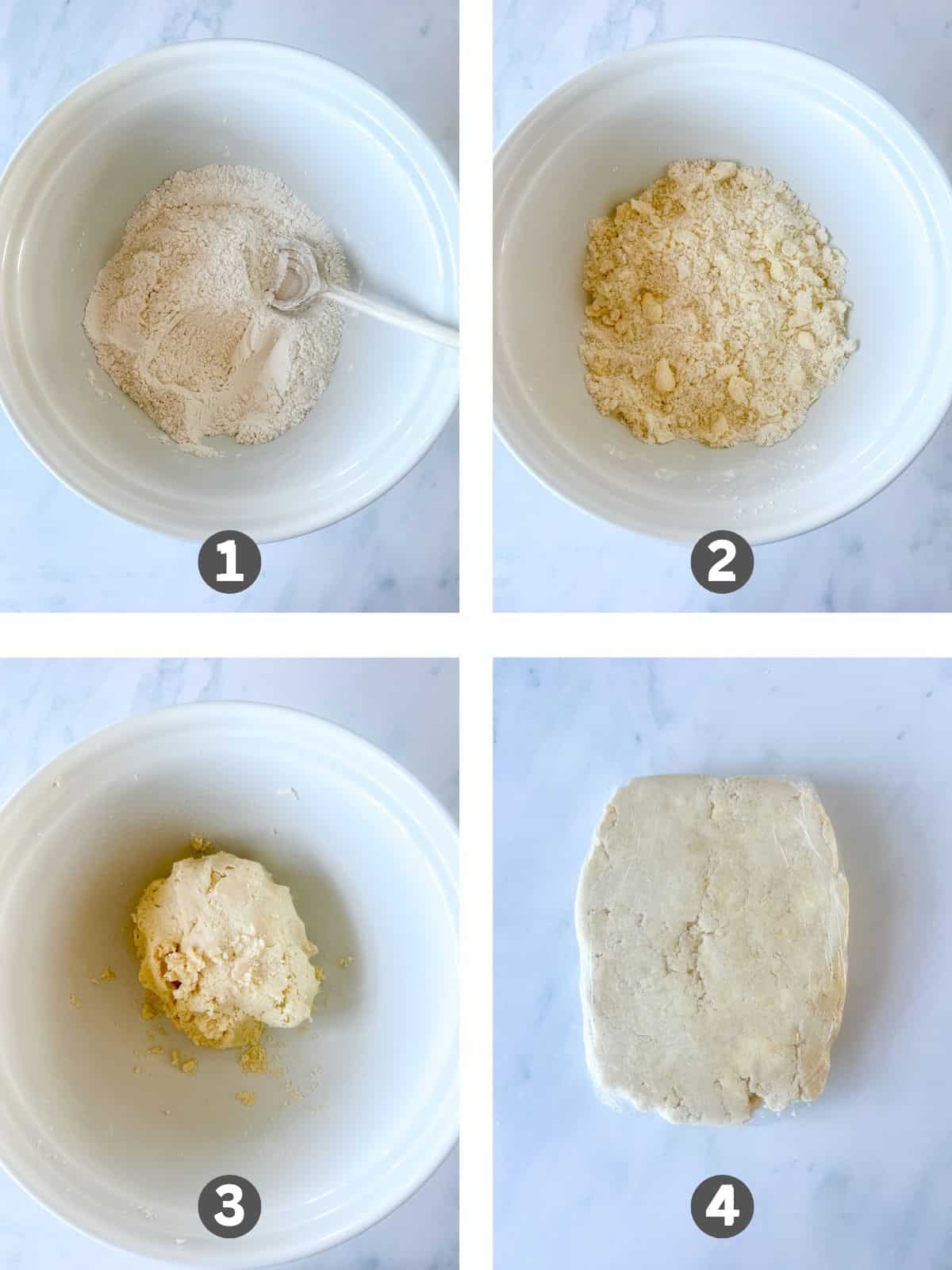
Step 1 - 2: Add the flour, sugar, and xanthan gum, into a large bowl and mix together. Place the cubed butter into the bowl and coat all the pieces with flour. Using your fingers, press the butter into the flour until the cubes of butter are around large pea-sized, leaving some pieces of butter slightly larger. See images above for reference if needed.
Step 3- 4: Add the cold water a few tablespoons at a time and mix into the butter and flour mixture. Continue this until the dough comes together well but is not wet and sticky (I used 100 grams of water, if it is too dry slowly add additional water if needed). Do not knead the dough, as we want to see chunks of butter within the dough. See images in the above.
Squeeze the dough together to make a rectangular shape. Wrap in plastic wrap and place the dough in the fridge to rest and chill for around 1 hour.
Tip: Work quickly as you want to keep the butter cold and not melt during this step.
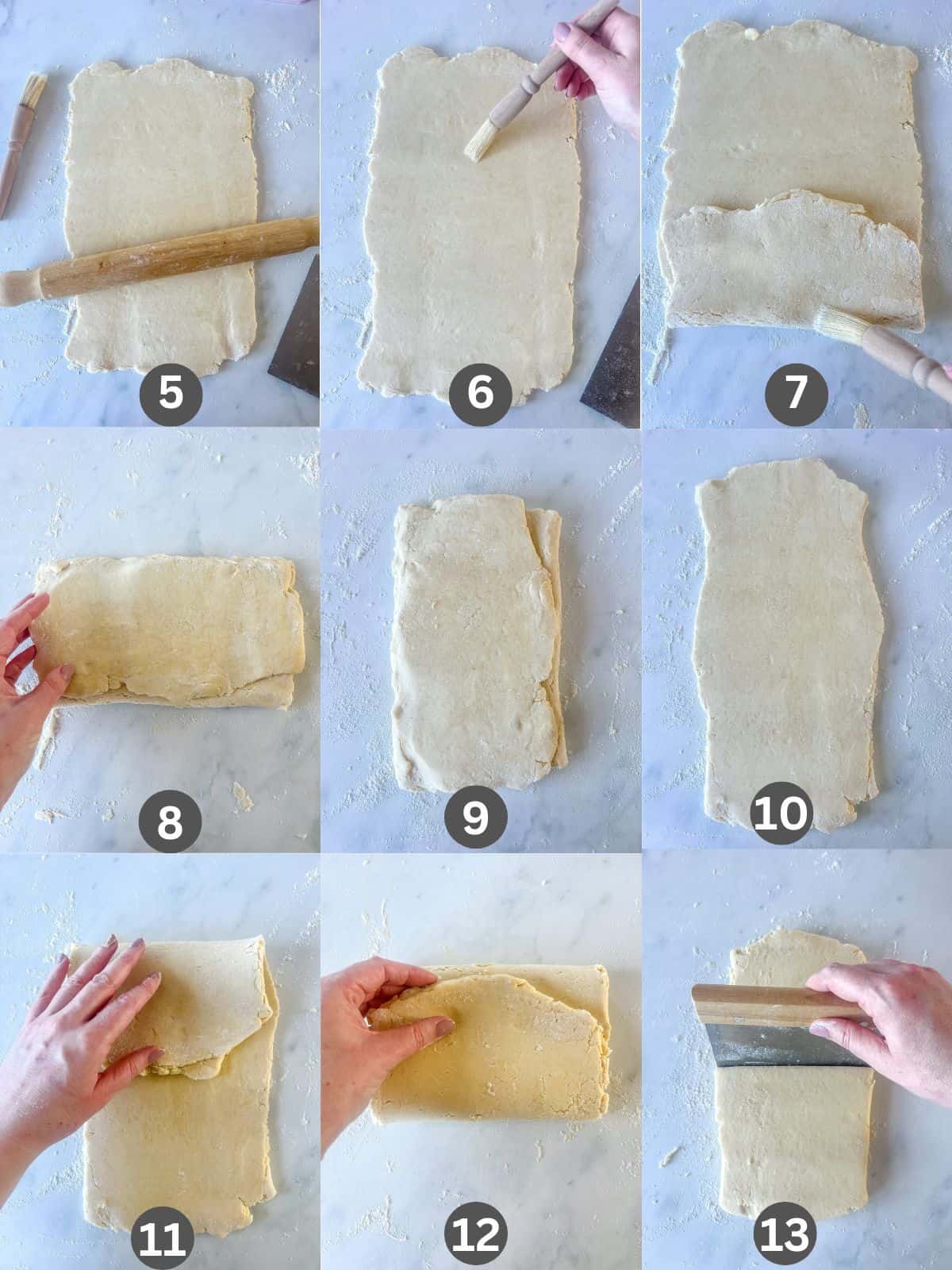
Step 5-13: Once the pie dough has chilled, it's time to laminate the dough. Roll out the dough onto a lightly floured surface. Brush any excess flour off the top of the dough. Fold the dough into thirds like a letter. Rotate the dough and roll out into a rectangle shape again, and then repeat the letter folds. Repeat this one more time. ( I usually do this 3-4 times in total)
Roll out the dough until it is around 10 inches long and 1 inch thick. Divide the dough in half and shape it into a disk (My dough weighs 700g in total, and I divide it up by 400g for the bottom pie crust and 300g for the decorations, such as pastry leaves). Wrap each disk well with plastic and place them in the fridge for at least 1 hour, longer if the kitchen is warm.
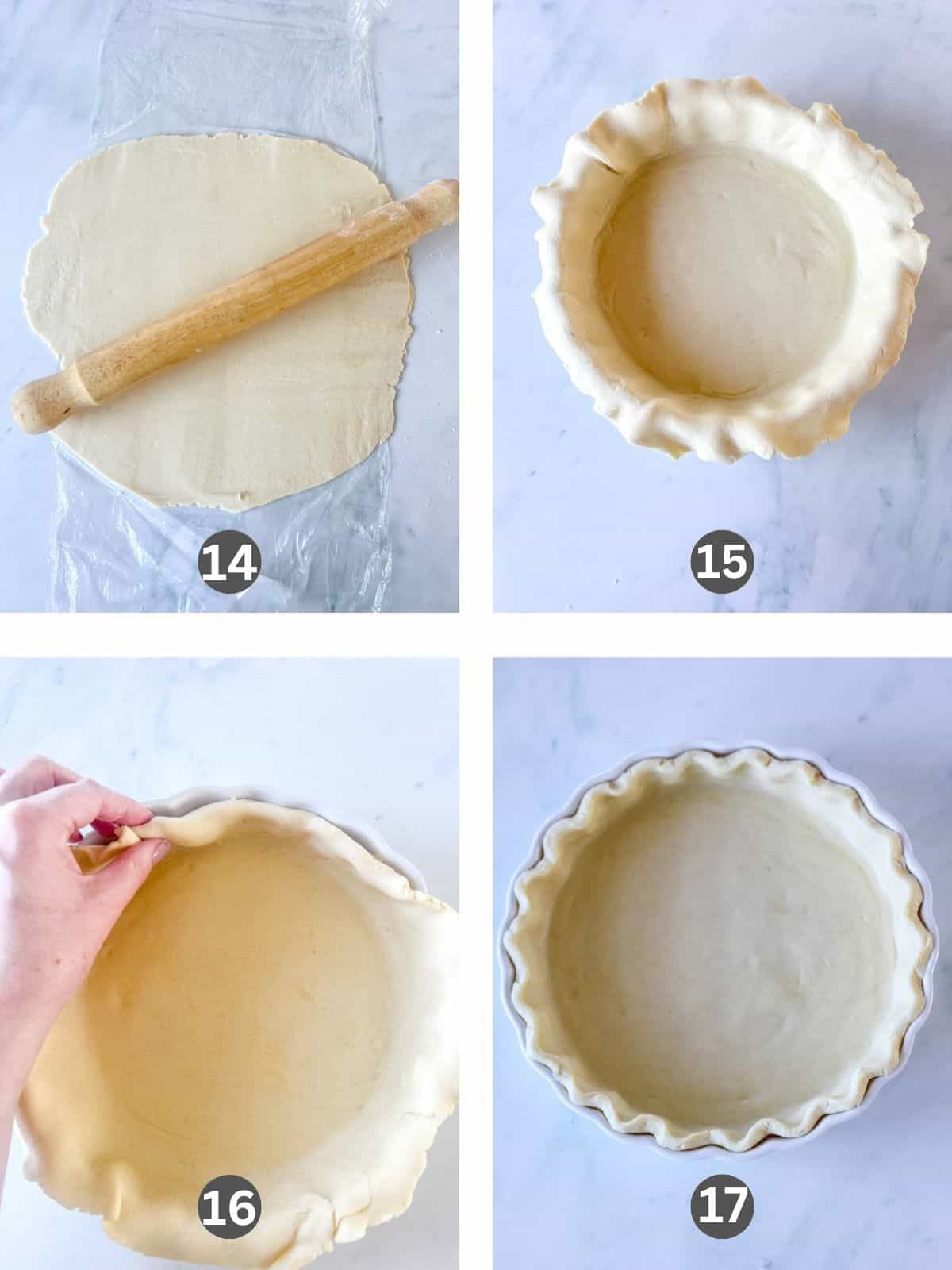
Step 14-17: Roll out the larger pie dough evenly until it is around a 12-inch circle. To make rolling the pie dough easier, I like to roll it out on parchment paper or Plastic wrap. (This will prevent it from sticking, and there is no need for extra flour on your surface, which prevents the pastry from drying out. It also makes the dough easier to lift onto the pie dish by lifting the plastic wrap and then flipping it over the pie dish).
Carefully transfer the dough without stretching it onto the 9 inch pie dish. Gently press the dough into the bottom and sides of the dish. Trim any excess dough around the edges of the pie dish leaving around 1 inch around the edge of the dish. Fold and tuck the excess dough around the inner edge of the pie dish. This will make a neat, thicker crust around the edge of the pie that is easier to shape.
Tip: Rolling the pastry out on plastic wrap or parchment paper will prevent it from sticking, and there is no need for extra flour on your surface, which prevents the pastry from drying out.
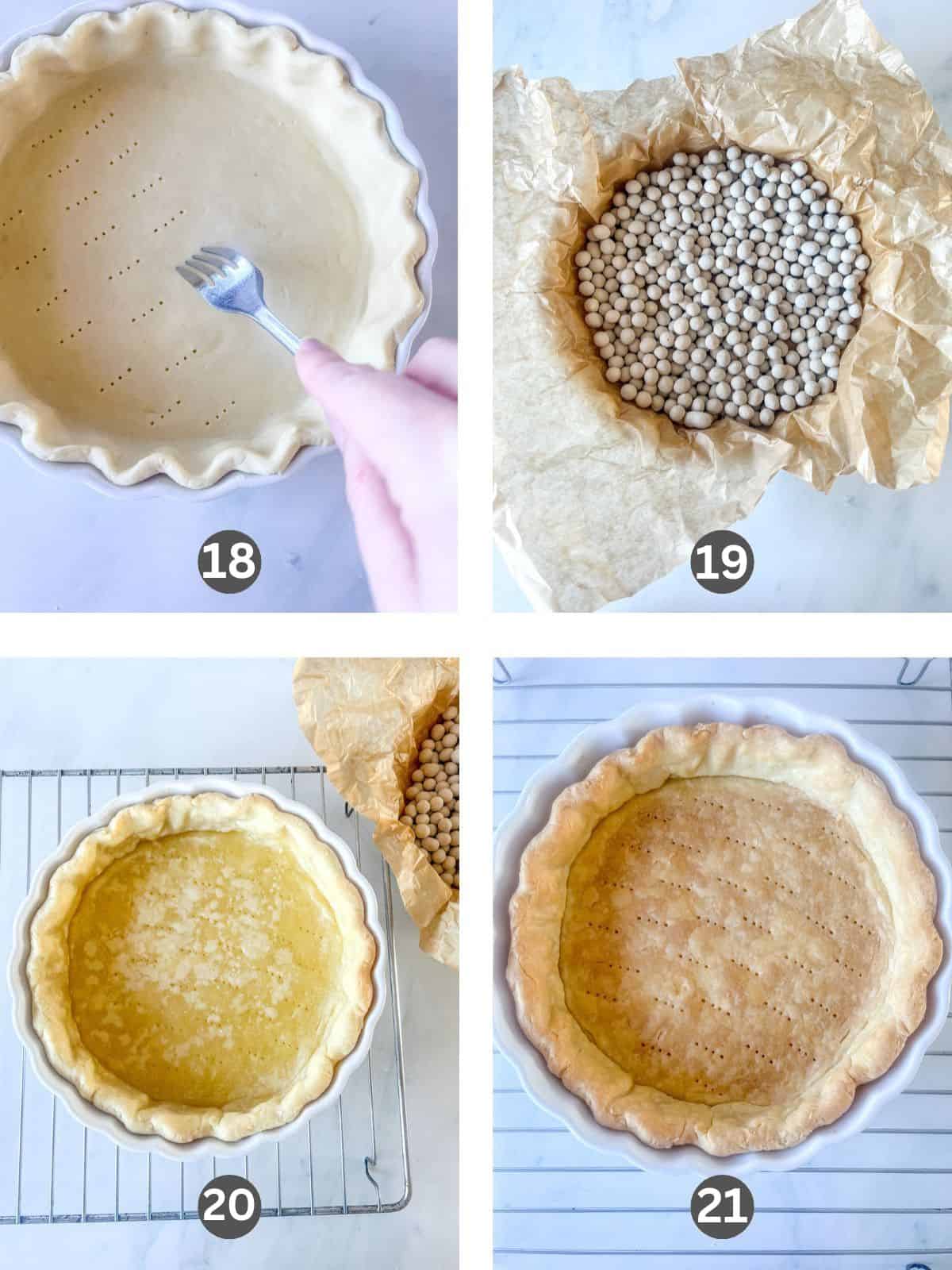
Step 18-21: Preheat the oven to 220°C/425°F.
After the dough has chilled, using a fork dock the base of the pie crust by pricking the bottom of the pie crust several times. This will allow steam to escape and help prevent it from puffing up and helps the bottom stay flat in the dish.
Line the pie crust with parchment paper, leaving some overlap over the sides of the pie dish. Gently fill it using ceramic baking beads, uncooked rice, or beans. Be sure to get all the pie weights up to the edge of the crust.Bake in the oven for approx 15-20 minutes until the edges of the pie crust are starting to turn a light golden brown.
Reduce the oven temperature to 190°C/375°F.Carefully remove from the parchment paper and pie weights and return the pie dish to the oven for a further 5 minutes. The bottom will be firm but not yet golden brown.
Tip: Blind baking the pie crust will prevent it from having a soggy bottom.
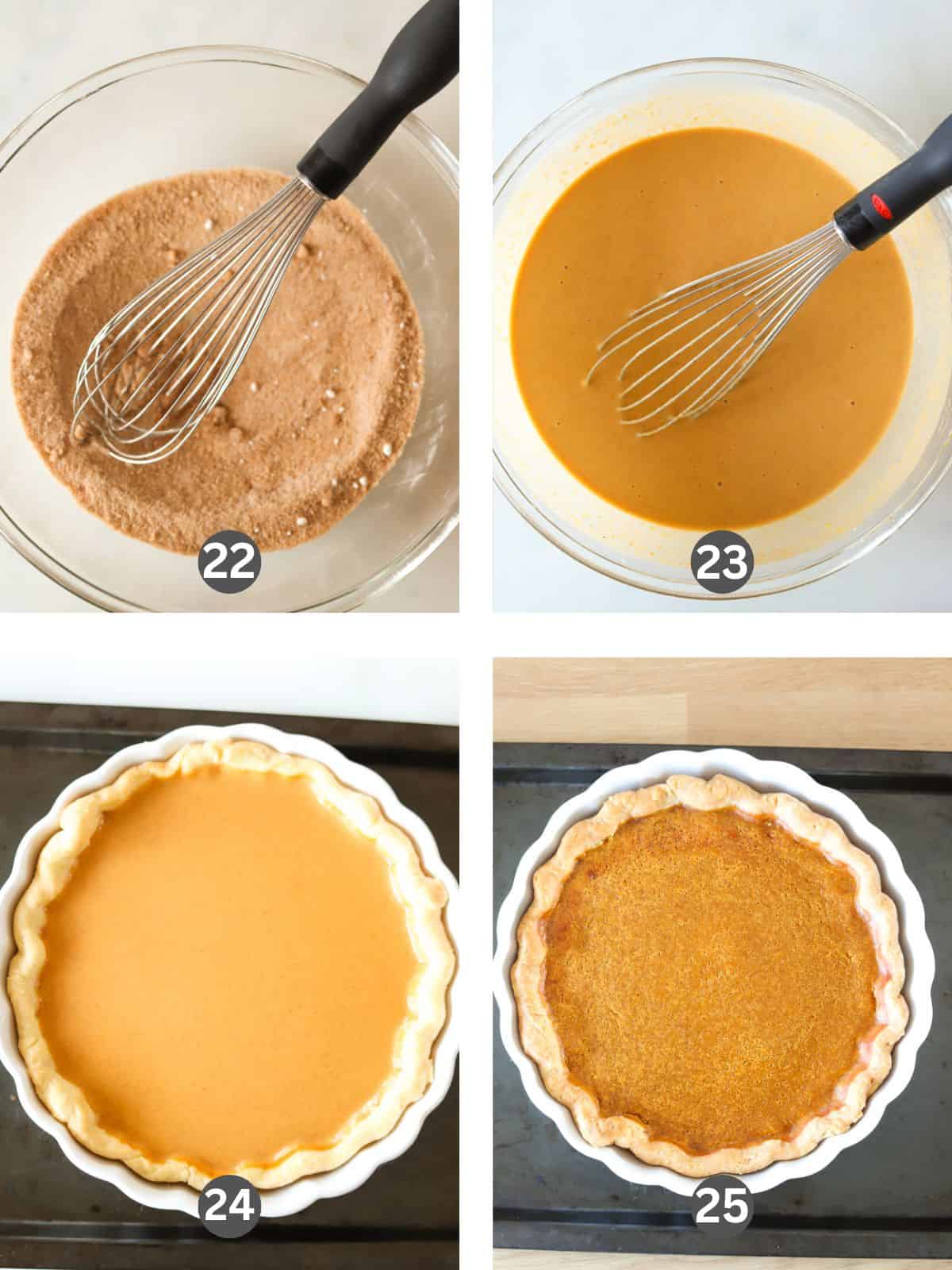
Step 22: While the pie crust is blind baking, start to make the pie filling.
In a large bowl mix sugar, cornstarch, cinnamon, ginger, nutmeg and salt.
Step 23: Add the pumpkin puree, heavy cream, eggs, and vanilla extract and whisk until fully combined.
Step 24: Once the pie crust has finished baking, Reduce the oven temperature to 350℉/175℃.Pour the pumpkin pie filling into the crust until it is almost at the top, just over ¾ full. There will be some filling left over that you can use in mini pumpkin pies or an additional pie, depending on the size of the pie dish you have used.
Step 25: Bake in the center of the oven for 50-55 minutes until the edges of the pie have set but the center is still slightly wobbly. (If the edges of the pie crust is browning too fast during baking, make a tent with foil to cover the edge of the pie while baking to prevent the edges from burning).
Place the pie dish on a cooling rack and let it come to room temperature for around 4 hours before serving.
Store covered in the refrigerator for up to 4 days, although the crust will be best the first couple of days.
💡 Pro Recipe Tips
- Tip #1: If making the pie crust work quickly as you want to keep the butter cold and not melt during this step.
- Tip #2: Rolling the pastry out on plastic wrap or parchment paper will prevent it from sticking, and there is no need for extra flour on your surface, which prevents the pastry from drying out.
- Tip #3: Use pumpkin puree and not pumpkin pie mix.
- Tip #4: Don't overbake, the pumpkin pie filling should slightly wiggle in the center but be firmer around the edges.
- Tip #5: Let the pie rest at room temperature and then refrigerate, as the filling will firm up while cooling.
❔ Recipe FAQs
Cover and store in the refrigerator for up to 5 days.
Yes, This recipe is best made the day before allowing it time to cool and set.
I have not tested this recipe using dairy-free cream, so I cannot guarantee the outcome.
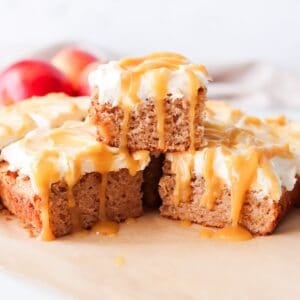
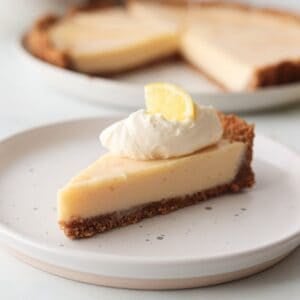
If you celebrate Thanksgiving, then this gluten-free pumpkin pie will be the perfect dessert. If you would like something a little different, try these gluten free apple pie bars, gluten free millionaires cheesecake, gluten free lemon pie, and gluten free basque cheesecake.
More gluten free pie recipes


If you tried this Gluten Free Pumpkin Pie Recipe. Please leave a star 🌟rating in the recipe card below & a review in the comments section further down the page. Subscribe and get free recipes straight to your inbox.
📖 Recipe
Gluten Free Pumpkin Pie
Nutritional information is meant as a guideline and all information is approximate.
Equipment
- 9 inch pie dish
- Large bowl
- Whisk
Ingredients
Gluten Free Pie Crust (You can use pre made store bought pie crust or make my gluten-free pie crust recipe)
- 360 grams gluten free all purpose flour
- 1 tablespoon sugar
- 1 teaspoon xanthan gum
- ¼ teaspoon salt
- 250 grams cold unsalted butter
- 110 grams cold water
Pumpkin Pie Filling
- 100 grams light brown sugar
- 100 grams white sugar
- 1 tablespoon cornstarch
- 1 teaspoon ground cinnamon
- ½ teaspoon ground ginger
- ¼ teaspoon ground nutmeg
- ¼ teaspoon salt
- 450 grams pumpkin puree
- 3 large eggs room temperature
- 300 milliliters heavy cream AKA double cream
- 1 teaspoon Vanilla extract
Instructions
How to Make a Gluten Free Pie Crust
- I have included information on how to make my gluten free pie crust, but you can use your preferred recipe. I recommend checking out my full post for my gluten-free pie crust recipe, as it's packed with helpful tips.This recipe yields 1 9-inch pie crust with extra leftover for decorations or mini pie crusts. Alternatively, it will make 2x 8-inch pie crusts. The filling will make a deep 9-inch filling or two 8-inch shallower fillings.
- Add the flour, sugar, and xanthan gum, into a large bowl and mix together. Place the cubed butter into the bowl and coat all the pieces with flour. Using your fingers, press the butter into the flour until the cubes of butter are around large pea-sized, leaving some pieces of butter slightly larger (work quickly as you want to keep the butter cold and not melt during this step). See images in the post above for reference if needed.
- Add the cold water a few tablespoons at a time and mix into the butter and flour mixture. Continue this until the dough comes together well but is not wet and sticky (I used 100 grams of water, if it is too dry slowly add additional water if needed). Do not knead the dough, as we want to see chunks of butter within the dough. See images in the post above.
- Squeeze the dough together to make a rectangular shape. Wrap in plastic wrap and place the dough in the fridge to rest and chill for around 1 hour.
- Once the pie dough has chilled, it's time to laminate the dough. Roll out the dough onto a lightly floured surface. Brush any excess flour off the top of the dough. Fold the dough into thirds like a letter. Rotate the dough and roll it out into a rectangle shape again, and then repeat the letter folds. Repeat this one more time. ( I usually do this 3-4 times in total).
- Roll out the dough until it is around 10 inches long and 1 inch thick. Divide the dough in half and shape it into a disk (My dough weighs 700g in total, and I divide it up by 400g for the bottom pie crust and 300g for the decorations, such as pastry leaves). Wrap each disk well with plastic and place them in the fridge for at least 1 hour, longer if the kitchen is warm.
How to prepare the pie crust
- Roll out the larger pie dough evenly until it is around a 12-inch circle. To make rolling the pie dough easier, I like to roll it out on parchment paper or Plastic wrap. (This will prevent it from sticking, and there is no need for extra flour on your surface, which prevents the pastry from drying out. It also makes the dough easier to lift onto the pie dish by lifting the plastic wrap and then flipping it over the pie dish).
- Carefully transfer the dough without stretching it onto the 9-inch pie dish. Gently press the dough into the bottom and sides of the dish. Trim any excess dough around the edges of the pie dish leaving around 1 inch around the edge of the dish. Fold and tuck the excess dough around the inner edge of the pie dish. This will make a neat, thicker crust around the edge of the pie that is easier to shape.
- Preheat the oven to 220°C/425°F.
- After the dough has chilled, using a fork, dock the base of the pie crust by pricking the bottom of the pie crust several times. This will allow steam to escape and help prevent it from puffing up and helps the bottom stay flat in the dish.
- Line the pie crust with parchment paper, leaving some overlap over the sides of the pie dish. Gently fill it using ceramic baking beads, uncooked rice, or beans. Be sure to get all the pie weights up to the edge of the crust.Bake in the oven for approximately 15-20 minutes until the edges of the pie crust are starting to turn a light golden brown.
- Reduce the oven temperature to 190°C/375°F.Carefully remove from the parchment paper and pie weights and return the pie dish to the oven for a further 5 minutes. The bottom will be firm but not yet golden brown.
How to make the pumpkin pie filling
- While the pie crust is blind baking, start to make the pie filling.
- In a large bowl mix sugar, cornstarch, cinnamon, ginger, nutmeg and salt.
- Add the pumpkin puree, heavy cream, eggs, and vanilla extract and whisk until fully combined.
- Once the pie crust has finished baking, reduce the oven temperature to 350℉/175℃.Pour the pumpkin pie filling into the crust until it is almost at the top, just over ¾ full. There will be some filling left over that you can use in mini pumpkin pies or an additional pie, depending on what size of the pie dish you have used.
- Bake in the center of the oven for 50-55 minutes until the edges of the pie have set but the center is still slightly wobbly. (If the edges of the pie crust is browning too fast during baking, make a tent with foil to cover the edge of the pie while baking to prevent the edges from burning).
- Place the pie dish on a cooling rack and let it come to room temperature for around 4 hours before serving.
- Store covered in the refrigerator for up to 4 days, although the crust will be best the first couple of days.
Notes
💡 Pro Recipe Tips
- Tip #1: If making the pie crust work quickly as you want to keep the butter cold and not melt during this step.
- Tip #2: Rolling the pastry out on plastic wrap or parchment paper will prevent it from sticking, and there is no need for extra flour on your surface, which prevents the pastry from drying out.
- Tip #3: Use pumpkin puree and not pumpkin pie mix.
- Tip #4: Don't overbake, the pumpkin pie filling should slightly wiggle in the center but be firmer around the edges.
- Tip #5: Let the pie rest at room temperature and then refrigerate, as the filling will firm up while cooling.
Nutrition
Disclaimer
Nutritional information is meant as a guideline and is always an approximate calculation. Recipes may include information of various products used. It is your responsibility to check that ingredients you use when making a recipe are gluten free.
Amanda says
Thank you for visiting. I hope you love this gluten free pumpkin pie recipe!